10.1.8Are all series geometric in the end?
The Ratio Test
Given
List the first four terms of
. What type of series is ? For what values of
will converge?
Let
Expand series
, showing the first four terms. Is this series geometric? Explain. Consider the tests you know for convergence. Which, if any, can be used to determine if
converges? When all tests you know so far fail, you can pretend that the series, in the end, becomes geometric. In other words, evaluate the ratio of successive terms as the number of terms approaches infinity. Evaluate
and call this limit , for limiting ratio. Just like a geometric series, since
, eventually, . Use the value of you computed in part (c) to conclude whether converges or diverges? Explain your conclusion.
The Ratio Test
Though only geometric series have a common ratio between successive terms, the ratio between successive terms as the number of terms approaches infinity can be a helpful way to determine if a non-geometric series will converge or diverge.
Using your work from problem 10-91, copy and complete the statement below to write a conjecture describing how the ratio between successive terms of an infinite series can be used to determine if the series converges or diverges.
The Ratio Test
Let
such that If _________ , then
___________ . If __________, then
___________.
What if
? In the case of infinite geometric series, a ratio of will guarantee divergence. But what about non-geometric series? What is the ratio as for each of the following two series? Use the results to explain why the Ratio Test is inconclusive when . If you have not done so already, revise your Ratio Test conjecture so that
is correctly included. If ____________ , then the Ratio Test is __________ .
Test the each of following infinite series for convergence. State the tests you used.

Let
Let
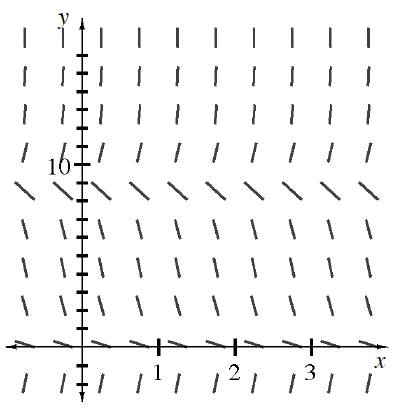
. Plot four different curves with four different starting points using Euler’s Method: . Plot points until you get to . What do you notice about all four curves? What is it about
which causes this to happen?
Examine the following series. Use one of the tests you have learned so far to determine if the series converges or diverges. State the tests you used. Homework Help ✎
Write the equation of a line such that
Examine the integrals below. Consider the multiple tools available for integrating and use the best strategy for each part. Evaluate each integral and briefly describe your method. Homework Help ✎
What is the arc length of the curve
Sketch a possible graph for the following situation. Do not worry about units, but label the axes appropriately. Homework Help ✎
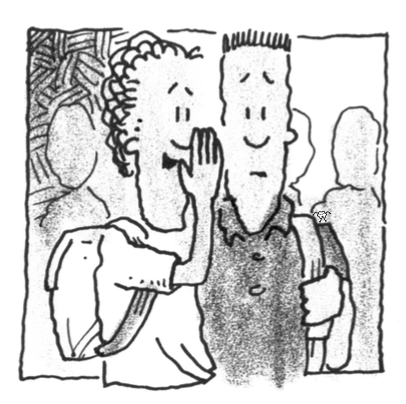
Archie arrives at school with an amazing rumor about his math teacher. He tells the first group of people he sees and then those people start telling others. Sketch a graph of the people who know the rumor as a function of time.
Given the curve whose equation is
Write an equation for
. What is the slope of the curve at
?
Examine the slope field shown at right. Imagine drawing some solutions, beginning with a variety of